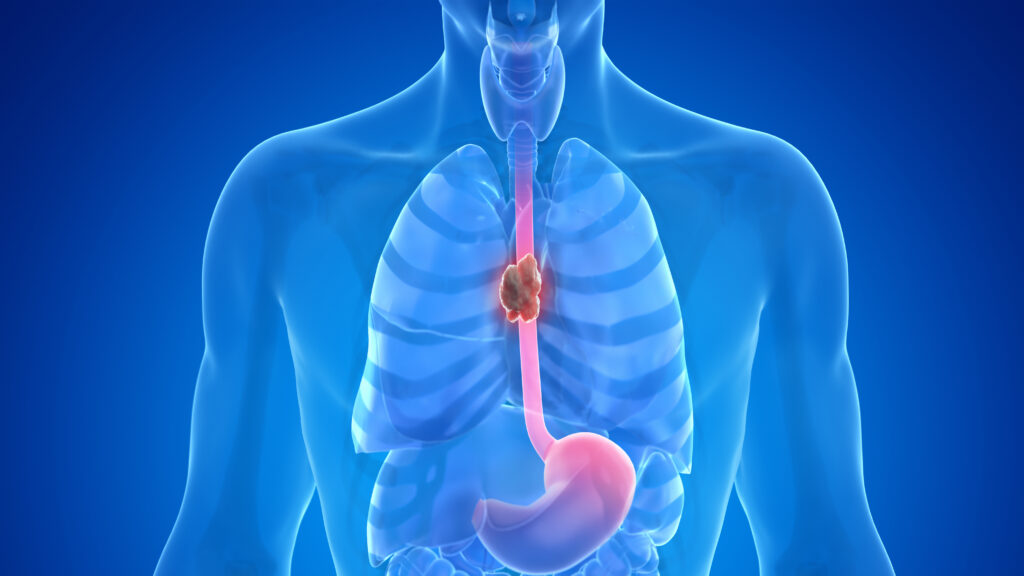
Oesophageal cancer is the eighth commonest cancer worldwide, the sixth leading cause of cancer deaths both worldwide and in the UK, and accounts for approximately 8,000 deaths per year in the UK. In the Western world, adenocarcinoma of the oesophagus is the predominant histological subtype of oesophageal cancer. Prognosis of oesophageal cancer is poor, with a 5-year survival in the UK of under 20%. The current diagnostic pathway for suspected oesophageal cancer is based on referral for endoscopy via the two-week-wait pathway, which is based on age and \"red-flag symptoms\" which typically indicate advanced incurable disease. It is well recognised that the two-week-wait criteria are neither sensitive nor specific, with only 4% of patients referred on this pathway being subsequently diagnosed with an upper gastrointestinal (GI) cancer at endoscopy.
A further challenge for general practitioners is that early oesophageal cancer typically presents either with no symptoms, or non-specific upper GI symptoms such as reflux and dyspepsia, more commonly seen in benign disease. Investigating all patients with non-specific upper GI symptoms with endoscopy is neither feasible nor appropriate given the invasive nature of endoscopy. Primary care physicians need a test to triage patients with non-specific upper GI symptoms into those who can be managed expectantly or investigated non-urgently and those who need urgent investigation with endoscopy. It is our intention to develop the breath test to be used for this purpose in primary care.
Pilot data from the NEED-1 study (Non-Invasive Testing for Early Oesophageal Cancer and Dysplasia) has generated a breath-VOC biomarker model that was able to differentiate between cancer and non-cancer, which will be validated in NEED-2.
Recruitment to this trial takes place through participating NHS centres. If you think you may be eligible, please speak with your GP or hospital clinician who can refer you through the appropriate pathway.
Healthcare professional enquiries: Caoimhe M Walsh